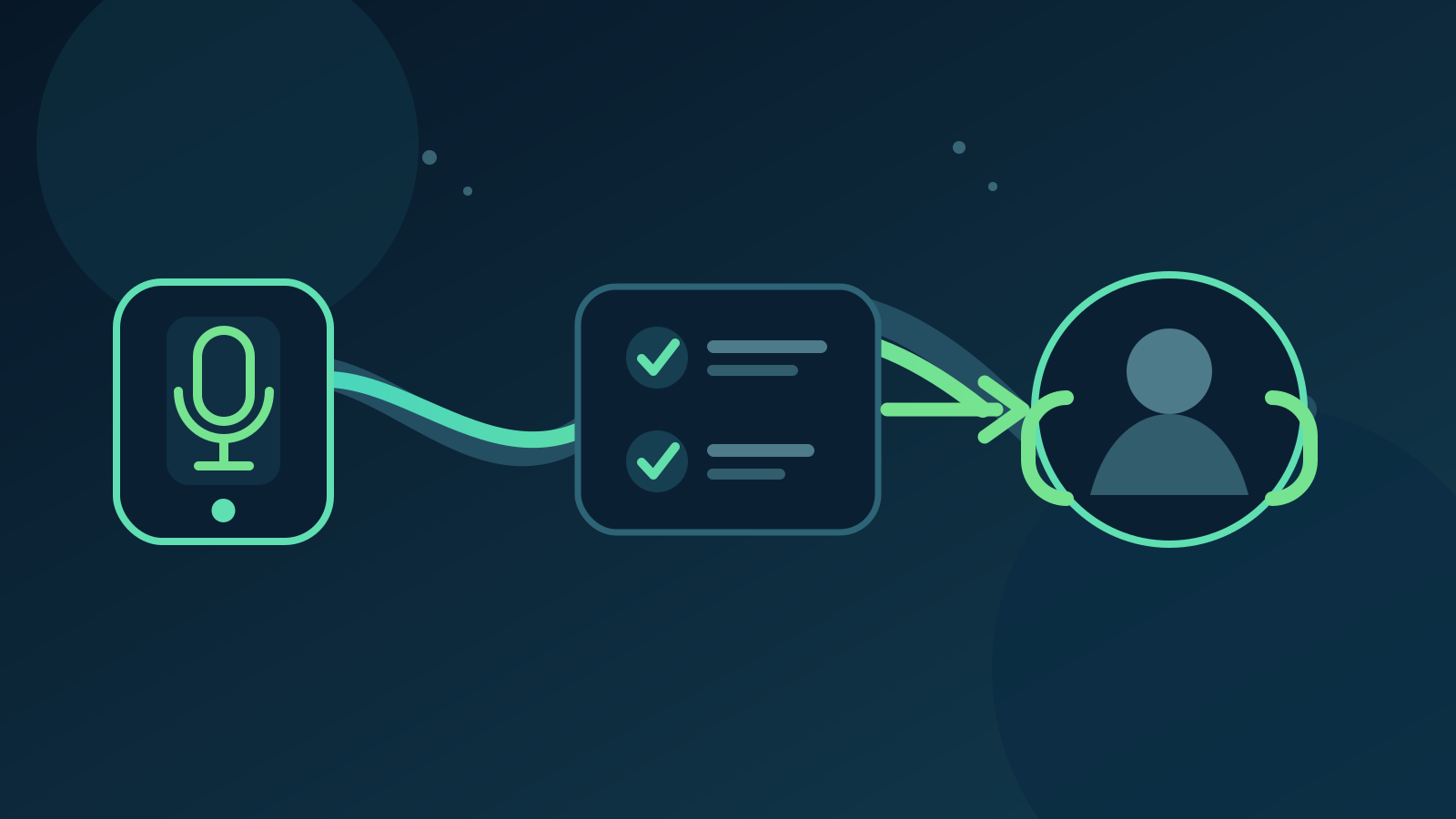
An AI voice agent answers or makes phone calls using speech recognition, generated responses and approved business rules. For most Australian businesses, the best first use is one narrow inbound workflow with clear disclosure, limited system access and immediate human handover. It should handle routine calls, not make sensitive decisions or trap callers in automation.
Start with a call type that has predictable questions and a low cost of error, such as after-hours enquiry capture. Test it against real accents, interruptions, names and unusual requests before connecting every call.
Key takeaways:
- Treat an AI voice agent as a controlled phone workflow, not a general replacement for staff.
- Tell callers when they are speaking with AI and explain recording or information collection where required.
- Keep complaints, emergencies, advice and unusual requests with people.
- Test the full call path, including transfers and connected-system updates.
- Measure correct outcomes and correction work, not calls answered alone.
Contents
- What is an AI voice agent?
- How is a voice agent different from an AI receptionist?
- What can an AI voice agent do for a business?
- What is the best first use case?
- How should you compare AI voice agent providers?
- What privacy, consent and calling rules apply?
- How should you design human handover?
- How do you test an AI voice agent?
- What should an AI voice agent cost?
- When is a voice agent the wrong choice?
- Where should an Australian business start?
- Frequently asked questions
What is an AI voice agent?
An AI voice agent is software that conducts a spoken conversation over the phone. It converts speech to text, decides what to say or do within configured rules, generates a spoken reply and may update an approved business system.
A business voice agent usually combines:
- a phone number or contact-centre connection
- speech recognition tuned for real telephone audio
- an approved knowledge source and conversation instructions
- a voice that reads the response aloud
- integrations for selected actions, such as creating a lead
- transfer, fallback and activity logging
The useful part is not the synthetic voice. It is the controlled workflow behind the call. A natural-sounding agent that invents availability or updates the wrong record is a poor system.
Australian keyword research for this guide found about 50 monthly searches for “AI voice agent Australia”, with medium advertising competition and a reported cost per click of $11.79. The search results include provider pages and discussion threads, but buyers still need practical guidance on scope, oversight and Australian calling obligations.
How is a voice agent different from an AI receptionist?
The main difference is scope. An AI receptionist is an inbound front-desk use of voice AI. An AI voice agent is the broader technology category and may support inbound or outbound calls for a defined business process.
| Option | Typical purpose | Suitable starting point | Main risk |
|---|---|---|---|
| AI receptionist | Answer, qualify, book and transfer incoming calls | After-hours or overflow enquiries | Mishandling unusual or sensitive callers |
| Inbound voice agent | Complete one phone workflow | Order status, booking confirmation or service triage | Reading or changing the wrong record |
| Outbound voice agent | Place approved calls at scale | Existing-customer reminders with a valid basis to call | Consent, telemarketing and reputational risk |
| Human call handler | Manage varied conversations requiring judgement | Complaints, advice, negotiation and exceptions | Higher cost per handled call |
| Hybrid service | Let automation handle routine steps and people handle exceptions | Most businesses with mixed call types | Poor transfer design or unclear ownership |
If the business mainly needs front-desk call handling, read the AI receptionist Australia guide. A separate voice agent project makes sense when the workflow has a narrower operational purpose or includes carefully governed outbound calls.
What can an AI voice agent do for a business?
A voice agent works best when the call has a limited purpose, the required information is known and the next action can be checked.
| Call type | Useful agent action | Human responsibility |
|---|---|---|
| New enquiry | Capture service, location, timing and contact details | Confirm fit, price and follow-up |
| Appointment confirmation | Confirm, cancel or request a new time within policy | Handle exceptions and urgent changes |
| Order or job status | Read an approved status after identity checks | Resolve delays, disputes and missing information |
| After-hours call | Answer common questions and create a callback task | Review priority and respond within the stated time |
| Routine service triage | Ask approved questions and route the call | Diagnose complex issues and make safety decisions |
| Existing-customer reminder | Deliver an approved message and record the response | Confirm the legal basis, timing and contact rules |
| Survey | Ask a short fixed set of questions | Review consent, bias and how results will be used |
Do not let the agent improvise policy, price, availability or professional advice. Give it a reliable source, define which fields it may use and tell it what to do when the answer is missing.
Voice agents can also create tasks, send approved confirmations or add notes to a customer record. Each action needs its own permission and validation. Reading a booking status does not justify unrestricted access to change every booking.
What is the best first use case?
For most Australian businesses, the best first use is after-hours or overflow enquiry capture for one service line. It provides enough real calls to test the system while keeping a person responsible for qualification, pricing and follow-up.
A narrow first workflow can:
- state that the caller is speaking with an AI assistant
- identify the reason for the call
- collect a name, contact number and a few approved details
- answer basic questions from maintained business information
- recognise urgent, sensitive or unsupported requests
- transfer the call or explain the callback process
- create a structured task for the right team
- send an approved confirmation if appropriate
- log the outcome for review
Write the workflow before selecting software. Define which callers are eligible, what information can be collected, which questions may be answered, what the agent must never say and how quickly staff will follow up.
Outbound calling is not the best pilot for most businesses. It adds contact-list, consent, identity, calling-time and reputation risks before the team has proved basic call quality and monitoring.
How should you compare AI voice agent providers?
Compare providers using recorded test scenarios and a written workflow. A polished demonstration is not evidence that the system will understand your customers or update your tools correctly.
| Criterion | Questions to ask |
|---|---|
| Call quality | How does it handle Australian accents, interruptions, noise, spelling and numbers? |
| Latency | Does the pause between turns feel workable, and what happens on a slow connection? |
| Knowledge control | Which sources can it use, and how are unsupported answers blocked? |
| Integrations | Which exact fields can it read or update in the CRM, calendar or job system? |
| Handover | Can a caller ask for a person at any time, and what context reaches the staff member? |
| Privacy | Where are recordings, transcripts, prompts and logs processed and stored? |
| Disclosure | Can the opening identify the AI and explain recording or data collection? |
| Administration | Are roles, activity logs, version history and emergency stop controls available? |
| Monitoring | Can failed calls be reviewed by outcome, reason and workflow version? |
| Reliability | What happens during an outage or when an integration does not respond? |
| Ownership | Who controls the phone number, configuration, data and exported records? |
| Pricing | Are charges based on minutes, calls, phone numbers, model use or integrations? |
Ask the provider to demonstrate failure, not only success. Disconnect an integration, use an ambiguous name, change an answer halfway through and request a person repeatedly. The system should fail safely and predictably.
For most businesses, the best option is the provider that supports narrow permissions, clear handover and useful monitoring. A highly natural voice is secondary.
What privacy, consent and calling rules apply?
A voice agent may handle names, phone numbers, addresses, account details, call recordings, transcripts and inferred information about a caller. Privacy, disclosure and calling rules belong in the workflow design.
The Office of the Australian Information Commissioner says privacy obligations apply to personal information entered into an AI system and to generated output containing personal information. Its guidance recommends product due diligence, privacy by design, meaningful human oversight and clear identification of public-facing AI tools.
Before launch, document:
- how the agent identifies itself
- whether calls are recorded or transcribed
- what information is collected and why
- which systems receive call data
- where information is processed and stored
- who can access recordings and transcripts
- how long each record is retained
- whether information is used to train models
- how callers can reach a person, correct information or complain
Recording and surveillance laws can vary by state, territory and situation. Get appropriate legal advice for the call type and locations involved rather than relying on a generic provider setting.
For outbound marketing, the Do Not Call Register industry guidance says organisations that make or cause telemarketing calls to be made must understand and meet their legislative requirements. It also provides a process for checking calling lists against registered numbers. Automation does not remove the business's responsibility for who is called, why, when and how.
Treat consent to receive one type of call as purpose-specific. A customer giving a phone number for delivery updates has not automatically agreed to unrelated sales calls.
How should you design human handover?
Human handover needs a trigger, an available destination and enough context for the person taking over. “I will transfer you now” is not a plan if nobody answers.
Transfer or stop automation when the call involves:
- an emergency or immediate safety risk
- a complaint, dispute or distressed caller
- legal, financial, medical or other professional advice
- identity uncertainty or access to sensitive information
- a refund, contract change or binding commitment
- repeated misunderstanding or poor audio
- a direct request for a person
- anything outside the approved workflow
Use different fallbacks during staffed and unstaffed hours. During staffed hours, transfer to a named queue and send a short summary. After hours, state the response time honestly, collect the minimum details and create a priority task.
The Australian Government's guidance for AI adoption recommends assigning accountability, disclosing AI use, testing before deployment and monitoring after deployment. Apply those practices to each call workflow, not only to the software contract.
How do you test an AI voice agent?
Build the test set from real calls and known failure points. Include normal requests, edge cases and situations the agent must refuse or transfer.
Test at least these conditions:
- Australian accents and regional pronunciation
- mobile connections, speakerphone and background noise
- interruptions, silence and callers changing their answer
- names, email addresses, street names and long numbers
- ambiguous dates, times and time zones
- requests for prices or services not in the approved source
- prompt-injection attempts spoken by a caller
- unavailable staff, failed transfers and disconnected integrations
- urgent, sensitive and abusive calls
- requests to delete or correct information
Review the transcript, audio, business-system record and follow-up action together. A call can sound convincing while producing a wrong booking or incomplete lead.
Run a four-week pilot with one call type and a human fallback. Set stop conditions for invented information, incorrect identity handling, unauthorised changes, failed disclosure, missed escalation and repeated misunderstanding.
Useful measures include:
| Measure | What it shows |
|---|---|
| Correct outcome rate | Whether the intended task was completed accurately |
| Appropriate transfer rate | Whether risky or unsupported calls reached people |
| Detail accuracy | Whether names, numbers and requests were captured correctly |
| Manual correction rate | How much staff work the automation creates |
| Caller abandonment | Whether delays or conversation design cause hang-ups |
| Repeat contact rate | Whether callers need to call again for the same issue |
| Privacy or consent incidents | Whether the workflow handles information properly |
| Cost per correct outcome | Whether the system is commercially useful |
Do not optimise for the percentage of calls kept away from people. A higher containment rate can hide poor service and unsafe decisions.
What should an AI voice agent cost?
AI voice agent pricing often includes setup plus usage. Providers may charge per minute, call, phone number, concurrent call, integration or model request.
Request a written estimate covering:
- workflow design and configuration
- phone numbers, call routing and transfers
- included minutes and excess rates
- speech, model and text-to-speech usage
- CRM, calendar or job-system integration
- testing, reporting and call review
- changes to scripts, rules and knowledge sources
- storage, transcription and data export
- support and outage handling
Compare cost per correct outcome, not cost per minute. Include staff time spent reviewing calls, fixing records, following up exceptions and maintaining source information.
A simple phone menu, callback form or human answering service may cost less and perform better when call volume is low or conversations vary widely.
When is a voice agent the wrong choice?
A voice agent is the wrong choice when the call depends on empathy, negotiation, professional judgement or unrestricted access to sensitive information.
Do not start with:
- emergency or crisis calls
- complaints and vulnerable customers
- legal, medical or financial advice
- debt collection or payment-detail changes
- employee relations and confidential internal matters
- high-value negotiations or contract commitments
- sales calls without a documented basis to contact each person
- workflows with no staff owner or reliable fallback
It is also a poor fit when source information is outdated. The agent will reproduce bad hours, prices and policies quickly and consistently.
Fix the underlying call process first. If staff cannot agree on the correct questions, escalation rules and ownership, automation will make the uncertainty harder to manage.
Where should an Australian business start?
Review two weeks of calls and group them by purpose, volume, handling time, risk and outcome. Choose one frequent, rules-based call type with a low cost of error.
Write a one-page call policy. Include disclosure, approved information, identity checks, prohibited actions, transfer triggers, fallback wording, data retention and the person accountable for results. Test the policy manually before configuring it in software.
Deployed AI builds managed AI systems with scoped business-tool connections, testing, team training and ongoing Australian support. If a voice workflow looks suitable, book a free 30-minute AI audit to map the calls, controls and pilot measures before choosing a platform.
Frequently asked questions
What does an AI voice agent do?
An AI voice agent conducts a phone conversation, follows approved rules and may complete selected actions in connected systems. It can capture details, answer controlled questions, confirm appointments and transfer calls, but people should handle sensitive or unusual situations.
Is an AI voice agent the same as an AI receptionist?
An AI receptionist is one type of AI voice agent focused on inbound front-desk calls. The broader voice-agent category can also support specific service, reminder, survey or outbound workflows where the business has an appropriate basis to call.
Do callers need to know they are speaking with AI?
Clear identification is the safer standard for a public-facing voice agent and supports informed caller expectations. Businesses should also explain recording and information collection where required for the call and applicable law.
Can an AI voice agent make outbound calls in Australia?
It can place outbound calls, but the business remains responsible for consent, the Do Not Call Register, calling standards, accurate identification and the purpose of each call. Get appropriate advice before automating marketing or other high-impact outbound calls.
How long should an AI voice agent pilot run?
A four-week pilot is a practical starting point when call volume is high enough to cover normal and unusual scenarios. Keep the scope to one call type, review outcomes frequently and pause the pilot if disclosure, privacy, accuracy or escalation controls fail.