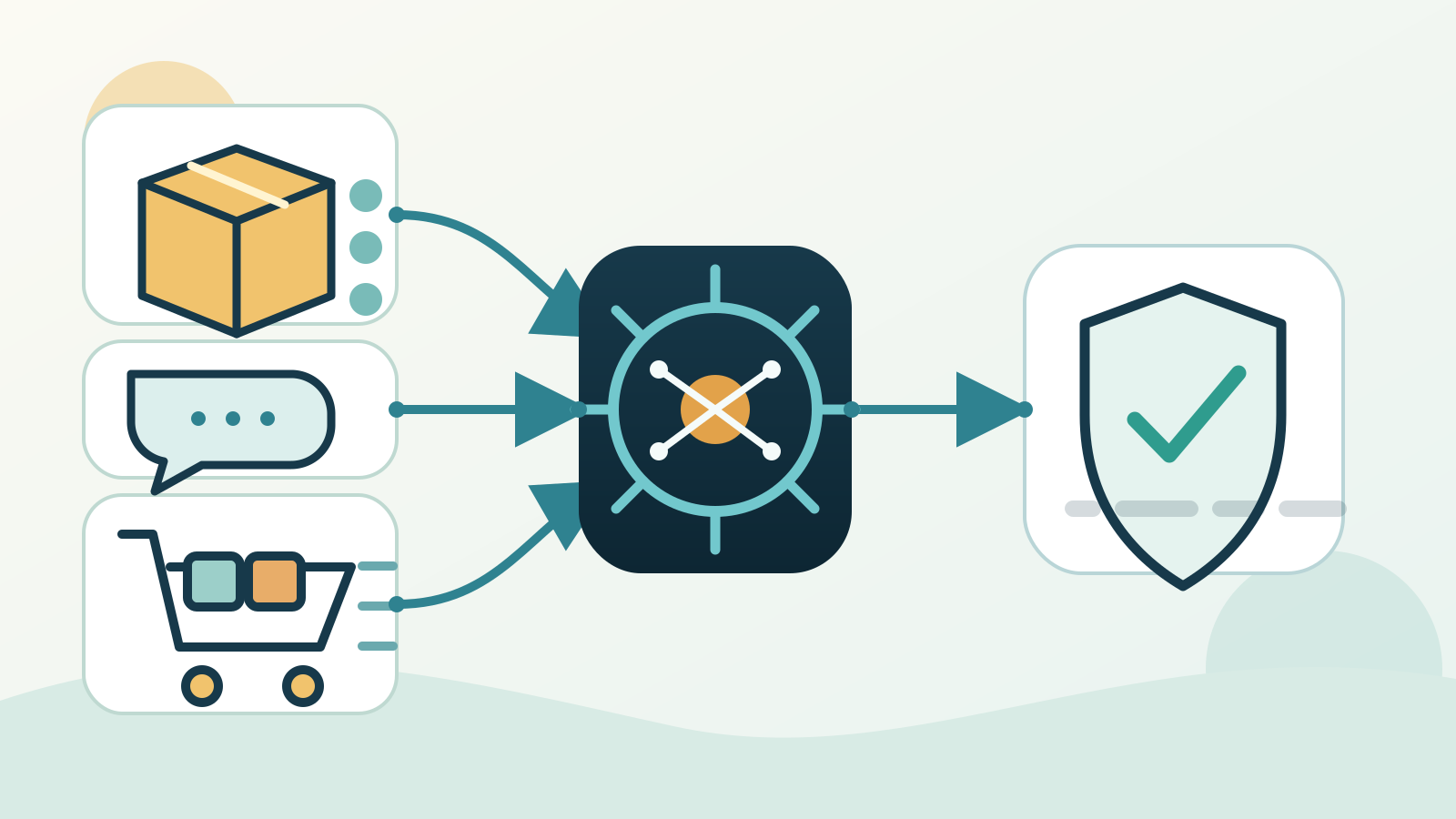
AI for ecommerce can help online retailers improve product information, answer routine questions, classify returns, forecast demand and prepare marketing content. The best first project uses reliable store data, produces an output a person can check and has a direct measure such as fewer corrections, faster response or lower stockholding.
For most Australian ecommerce businesses, the strongest starting point is product-data quality or customer-service triage. Both use information the business already owns, solve repeated work and can begin in draft mode without letting AI set prices, issue refunds or publish claims on its own.
Key takeaways:
- Start with one repeated ecommerce workflow, not a store-wide AI rollout.
- Fix product, order and inventory data before adding prediction or personalisation.
- Keep people responsible for claims, pricing, refunds, fraud decisions and unusual customer situations.
- Give each system the minimum store access needed for its task.
- Compare the total cost with a measured operational or customer result.
Contents
- What does AI for ecommerce mean?
- Where can AI help an online store?
- Which ecommerce AI project should you start with?
- How can AI improve product data and merchandising?
- Can AI handle ecommerce customer service?
- How can AI support inventory and demand planning?
- What should AI never publish or decide alone?
- What data and integrations does ecommerce AI need?
- How do you run a safe ecommerce AI pilot?
- How should you measure ecommerce AI?
- When is AI the wrong tool for an online store?
- Frequently asked questions
What does AI for ecommerce mean?
AI for ecommerce means using software that can interpret varied information, generate content or predict likely outcomes across an online retail operation. It may work with product catalogues, customer messages, search behaviour, orders, returns and inventory records.
The term covers several different capabilities:
- Generative AI prepares product descriptions, email drafts and support replies.
- Classification sorts messages, returns, products or fraud alerts into useful queues.
- Recommendation systems rank products for a shopper or merchandising placement.
- Forecasting models estimate demand, stock risk or likely returns from historical patterns.
- Computer vision helps classify product images, detect missing attributes or support visual search.
These systems do not share the same data or risk. A tool that rewrites a product description is different from one that changes a price or blocks an order. Treat each use as a separate workflow with its own owner, test and approval limit.
Australian businesses are still early in adoption. The Australian Bureau of Statistics reported that 12% of businesses used AI in 2024–25, up from 1% in 2021–22. The same ABS release found that 32% of businesses received orders online. That combination creates a large practical opportunity, but adoption alone says nothing about whether a particular tool improves an online store.
Where can AI help an online store?
AI is most useful when the task contains enough variation to make fixed rules awkward, but the output can still be checked against a trusted record.
| Ecommerce workflow | Useful AI contribution | Human responsibility |
|---|---|---|
| Product catalogue | Draft descriptions, extract attributes and flag missing fields | Verify specifications, claims, price and publish status |
| On-site search | Interpret natural-language queries and rank relevant products | Monitor poor results, exclusions and merchandising priorities |
| Customer service | Classify intent, retrieve order facts and prepare a reply | Handle exceptions, complaints, commitments and sensitive cases |
| Returns | Extract the reason, product and evidence into a review queue | Decide eligibility, remedy, fraud concerns and customer outcome |
| Inventory planning | Highlight unusual demand and stockout or overstock risk | Approve orders using lead times, cash flow and business context |
| Marketing | Prepare channel variants from approved product facts | Confirm audience, offer, consent, claims and final release |
| Review analysis | Group genuine feedback themes and product issues | Preserve the original review and investigate the cause |
The best use is not necessarily the most visible one. A chatbot may look impressive, but cleaning catalogue data can improve search, marketplace feeds, customer answers and staff efficiency at once.
Our broader AI for retail guide covers store operations and customer safeguards across physical and online retail. This guide focuses on the systems and controls around an ecommerce catalogue, checkout, fulfilment and post-purchase service.
Which ecommerce AI project should you start with?
For most online retailers, start with product-data quality if the catalogue is inconsistent. Start with service triage if the support team repeatedly reads the same order, delivery and return questions.
Choose product data when the catalogue is the bottleneck
A product-data workflow can extract attributes from supplier files, compare them with required fields and prepare a draft description. It should show the source beside every proposed value and refuse to invent a missing specification.
This is a strong first project because staff can compare the draft with supplier information before publication. Better structured data also supports filters, search, marketplaces and future recommendation systems.
Choose service triage when message volume is the bottleneck
A service workflow can identify the customer, retrieve current order information, classify the question and prepare a reply from approved policies. Keep sending under staff approval until the business has tested normal and unusual cases.
Do not make response speed the only goal. A fast answer with the wrong delivery promise, return right or stock status creates more work than a slower accurate response.
Use a scoring rule instead of choosing by novelty
Score candidate workflows against five questions:
- How often does the task happen?
- How much staff time does it consume now?
- Is there a reliable source of truth?
- Can a person check the output quickly?
- What happens if the system is wrong?
Choose frequent work with reliable records, quick review and a contained consequence. Leave high-impact decisions until the team has evidence that the underlying data and controls work.
How can AI improve product data and merchandising?
AI can turn inconsistent supplier text, spreadsheets and images into proposed catalogue fields. It can draft descriptions, identify missing attributes, suggest product groupings and flag entries that do not follow the store's format.
A controlled product workflow might:
- receive a supplier file and approved product images
- extract the brand, model, material, dimensions and other allowed attributes
- compare those values with the store's required schema
- mark missing or conflicting information instead of guessing
- prepare a description using only confirmed fields
- show the source evidence beside the draft
- wait for merchandising approval before publication
The product information system or ecommerce platform should remain the source of truth. AI can prepare a proposed update, but the store should preserve the original supplier record and log who approved the change.
Product claims need extra care. Do not let a model turn “water resistant” into “waterproof”, infer compatibility from a similar item or add sustainability claims without evidence. The wording may sound plausible while changing the commercial meaning.
Personalisation also depends on product data. Recommendations are weak when sizes, categories, availability and variant relationships are wrong. Fix catalogue identity before buying a more advanced recommendation layer.
Can AI handle ecommerce customer service?
AI can handle parts of ecommerce customer service, especially classification, information retrieval and first-draft replies. It should not be given unlimited authority to resolve every case.
A useful service assistant can:
- identify whether a message concerns delivery, product information, payment, return or account access
- retrieve current order status from the approved system
- quote the relevant section of the store's published policy
- draft a reply that a team member can accept, edit or reject
- route urgent, emotional, unusual or legally sensitive matters to a person
- create a structured support note after the interaction
Set boundaries around what it can send. During the pilot, prevent it from changing an address, cancelling an order, issuing a refund, offering compensation or making a delivery commitment without an authorised person.
Customer frustration is often a sign that the normal script no longer fits. Escalate repeated contacts, conflicting order data, vulnerability, threats, chargebacks and any request that may involve legal rights.
The system should say when it cannot confirm an answer. A clear handover is better than a confident guess about stock, delivery or return eligibility.
How can AI support inventory and demand planning?
AI can compare sales, promotions, stock levels, lead times, returns and seasonality to flag products at risk of stocking out or holding too much inventory. The useful output is a ranked exception list with the reasons behind each alert.
Start in advisory mode. Let the system propose products for review rather than placing purchase orders. A buyer still needs to consider cash flow, minimum order quantities, supplier reliability, storage, campaign plans and products nearing replacement.
Forecasts are only as useful as their inputs. A temporary promotion, stockout or channel migration can distort historical demand. Mark those events so the model does not treat them as an ordinary pattern.
Measure forecasts at the product and time horizon that affects a real decision. A monthly category forecast may look accurate while missing a two-week stockout on the store's most profitable variant.
Keep fixed constraints outside the model. Credit limits, warehouse capacity, prohibited suppliers and approval thresholds should be explicit rules that can be tested directly.
What should AI never publish or decide alone?
AI should not independently publish product claims, alter material prices, approve refunds, suppress reviews or make adverse fraud decisions during an initial rollout.
Keep a person responsible for:
- factual claims about materials, performance, compatibility, origin and sustainability
- sale pricing, dynamic pricing limits and advertised savings
- return, refund, repair and replacement decisions
- suspected fraud, account restrictions and order cancellation
- complaints, vulnerable customers and unusual delivery problems
- marketing consent and sensitive personalisation
- review moderation and any removal of negative feedback
The ACCC says reviews should be independent and reflect the genuine opinion of the person who experienced the product or service. It is against the law for a business to create or arrange fake or misleading reviews. AI may summarise genuine feedback themes, but it must not invent reviews, rewrite a customer's meaning or suppress criticism to improve a rating.
The same principle applies to product copy. A person should confirm that the final page matches the evidence and does not create a misleading overall impression.
What data and integrations does ecommerce AI need?
Ecommerce AI usually needs less access than vendors first request. Map the fields and actions for one workflow, then grant only those permissions.
A product-data assistant may need read access to supplier files and draft access to selected catalogue fields. It does not need customer addresses or refund permissions. A service assistant may need order status and approved policies, but not full payment details or the ability to export the customer database.
Check these foundations before connecting a tool:
- Product identity: Are SKUs, variants, bundles and marketplace identifiers consistent?
- Inventory authority: Which system owns available stock when channels disagree?
- Order state: Can the tool distinguish paid, fulfilled, cancelled, returned and disputed orders?
- Policy version: Can every answer point to the current shipping, returns and warranty policy?
- Customer identity: How is the requester verified before order information is disclosed?
- Permissions: Can read, draft, approve, refund and publish access be separated?
- Logging: Can the business see the data retrieved, output prepared and action taken?
Personal information needs deliberate handling. The OAIC says privacy obligations apply to personal information entered into AI systems and to AI outputs containing personal information. Its guidance recommends due diligence, human oversight and privacy by design, and advises against entering personal information into publicly available generative AI tools as a matter of best practice.
Ask where data is stored, whether it is used to train another model, how long logs are retained, how access is removed and how information can be exported or deleted at contract end.
How do you run a safe ecommerce AI pilot?
Run the new system beside the current process before allowing it to act. Include routine cases, messy records and high-consequence exceptions.
- Define one workflow. Record the trigger, inputs, output, reviewer and actions the AI cannot take.
- Measure the baseline. Track current handling time, correction rate, backlog, customer outcome and operating cost.
- Clean the source data. Fix duplicate SKUs, stale policies and unclear inventory ownership.
- Build a test set. Include normal cases, missing fields, cancelled orders, split shipments, promotions and conflicting records.
- Start read-only or draft-only. Do not let the system publish, refund, cancel or reorder stock.
- Review every output. Record factual errors, unsafe suggestions, weak sources and unnecessary escalations.
- Test permissions and failure. Remove a data feed, revoke access and confirm the manual process still works.
- Expand only from evidence. Add one permission or workflow at a time after the agreed measures improve.
The Australian Government's Voluntary AI Safety Standard provides 10 guardrails covering accountability, risk management, data, testing, human control, transparency and contestability. An ecommerce pilot can apply them in practical terms: name an owner, document limits, test failure, log decisions and let staff stop the system.
Our AI workflow automation guide explains how to map triggers, sources, approvals and exception paths before software selection.
How should you measure ecommerce AI?
Measure the result of the workflow, not the amount of content the AI produces.
| Workflow | Useful measures |
|---|---|
| Product data | Time per approved product, missing fields, factual corrections, rejected drafts |
| Customer service | First-response time, resolution time, correction rate, repeat contacts, escalations |
| On-site search | Zero-result searches, product clicks, conversion by query, poor-result reports |
| Returns | Classification accuracy, review time, wrong routing, customer resolution time |
| Inventory | Stockouts, excess stock, forecast error, buyer overrides, working capital |
| Marketing | Approval time, factual corrections, unsubscribe or complaint rate, conversion |
| Whole pilot | Software, integration, review, training, maintenance and incident cost |
Set a baseline before launch and compare the same type of work. A holiday campaign, major discount or carrier disruption can change the result, so record unusual events rather than attributing every movement to AI.
Include review effort. If staff save five minutes drafting but spend six minutes checking claims and correcting tone, the workflow has moved work rather than reduced it.
Agree on stop conditions. Pause the pilot if the system exposes order information to the wrong person, publishes an unsupported claim, repeatedly misses high-risk cases or acts outside its permission boundary.
When is AI the wrong tool for an online store?
AI is the wrong starting point when the store cannot identify products, orders or stock reliably. Fix the catalogue, inventory sync and policy ownership first.
It is also unnecessary for a fixed rule. Use ordinary automation to send a tracking link after fulfilment, block an impossible discount or route a known form field. Use AI where the input varies and the output still has a practical review path.
Do not add a conversational shopping assistant if the product data is incomplete. It will answer from weak information at higher speed. Do not add demand prediction when stock movements and promotions are not recorded consistently.
A smaller ecommerce business may get more value from improving navigation, photography, delivery information or checkout performance. Choose AI only when it solves a measured problem better than a simpler change.
Where should an ecommerce business start?
Review one month of catalogue corrections, customer messages, returns, search reports and stock exceptions. Mark repeated work, missing information and delays. Then choose the narrowest problem with a trusted data source and a person who can review the result.
For most stores, that means catalogue quality or support triage. Keep the system in draft mode, measure the correction burden and expand only after it improves the real workflow.
Deployed AI provides managed AI systems for Australian businesses, including selected integrations, setup, team training and ongoing Australian support. To assess one suitable ecommerce workflow, book a free 30-minute AI audit.
Frequently asked questions
What is AI for ecommerce?
AI for ecommerce is software that interprets store data, generates content or predicts likely outcomes across product, service, marketing, inventory and order workflows. Useful systems connect to approved records, operate within defined permissions and keep people responsible for material customer and commercial decisions.
What is the best first AI project for an online store?
Product-data quality or customer-service triage is usually the best first project. Both address repeated work, use information the store already holds and can begin in draft mode so staff can check every output before it affects a customer.
Can AI write product descriptions?
AI can prepare product-description drafts from confirmed supplier and catalogue data. A person should verify every specification, compatibility statement, performance claim, price and sustainability claim before publication, and the system should flag missing information rather than invent it.
Can an ecommerce chatbot issue refunds?
A chatbot can collect information and prepare a refund request, but it should not receive broad refund authority during an initial rollout. Keep eligibility, remedy, fraud concerns and unusual customer circumstances under authorised human review.
How much does ecommerce AI cost?
Cost depends on software, message or model usage, integrations, data cleanup, testing, staff review, training and support. Compare the full operating cost with a measured result from one workflow, such as faster approved product setup, fewer support corrections or lower stockout cost.