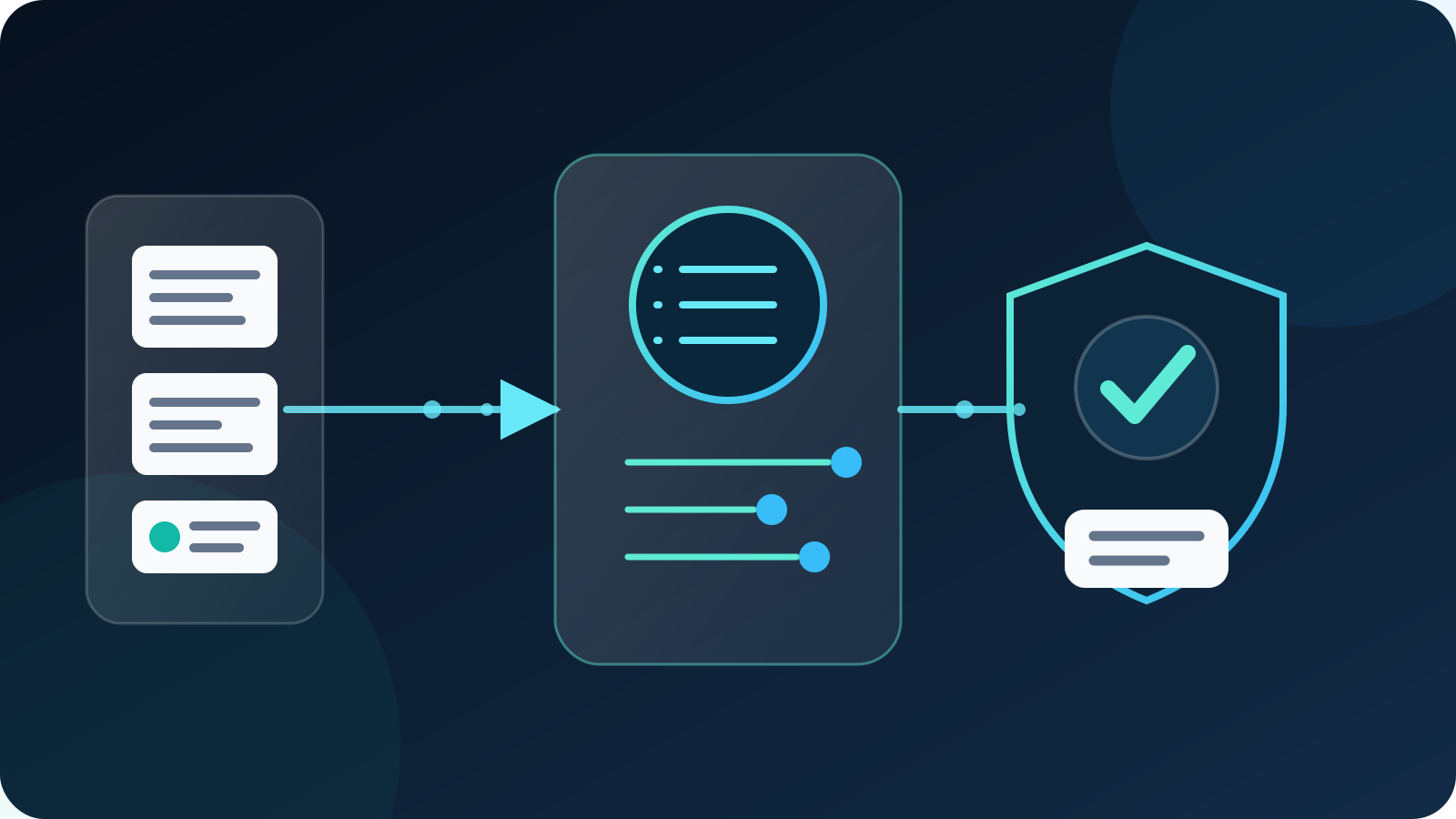
AI procurement uses artificial intelligence to compare supplier information, classify spend, review documents and prepare buying decisions for human approval. For most Australian businesses, the best first project is a read-only assistant that organises evidence and flags exceptions. Staff should retain authority over supplier selection, contract terms, bank-detail changes and purchase approvals.
The useful question is not whether AI can buy something. It is whether it can reduce the time needed to reach a well-supported, accountable decision.
Key takeaways:
- Start with one repeated procurement task that has a clear owner and measurable baseline.
- Use approved supplier, contract and spend data rather than open-ended web answers.
- Keep supplier onboarding, commitments and payments behind human approval.
- Require every recommendation to show its source evidence and evaluation criteria.
- Use fixed rules for policy controls, then use AI for variable reading, grouping and drafting.
Contents
- What is AI procurement?
- Where can AI help a procurement team?
- Which procurement AI project should you start with?
- What should AI never approve by itself?
- How can AI help with supplier research and tenders?
- What data and system access does procurement AI need?
- What are the main risks of AI in procurement?
- How do you run a procurement AI pilot?
- How should you measure the result?
- When is AI the wrong choice?
- Frequently asked questions
What is AI procurement?
AI procurement is the use of software to interpret purchasing information and support a defined procurement task. It may classify transactions, extract clauses, compare supplier responses, detect exceptions or draft a recommendation from approved evidence.
It is different from ordinary procurement automation:
- Rules-based automation applies fixed conditions, such as approval limits, required fields and purchase-order matching.
- Document extraction reads structured fields from quotes, forms, contracts and invoices.
- Classification models group purchases, suppliers or requests into consistent categories.
- Predictive models estimate demand, delivery risk or likely price movement from historical data.
- Generative AI summarises submissions, drafts questions and explains differences between options.
A sound workflow often combines them. Fixed rules can confirm that a request has the right approval and budget code. AI can then organise variable supplier documents or draft a comparison. A responsible employee still decides what to buy and records why.
Australian business adoption remains early. The Australian Bureau of Statistics reported that 12% of businesses used AI in 2024–25, compared with 1% in 2021–22. The same release found that 59% of businesses experienced supply-chain disruption, while 15% said supply-chain issues significantly hampered their activities or performance. Procurement teams have real problems to solve, but adoption figures alone do not prove that a particular AI tool will solve them.
Where can AI help a procurement team?
AI works best when procurement staff repeatedly read, compare or classify a large amount of information. It should make the evidence easier to inspect, not hide the basis for a decision.
| Procurement workflow | Useful AI contribution | Human responsibility |
|---|---|---|
| Purchase requests | Classify the request and identify missing information | Confirm need, budget and approval path |
| Spend analysis | Group transactions and suggest category corrections | Resolve ambiguous items and approve category rules |
| Supplier research | Gather approved facts into a standard comparison | Check sources, conflicts and suitability |
| Tender review | Extract responses against published criteria | Score judgement-based criteria and approve the outcome |
| Contract review | Locate clauses, dates, obligations and differences | Interpret risk and negotiate terms |
| Supplier onboarding | Check document completeness and flag inconsistencies | Verify identity, bank details and authority independently |
| Demand planning | Compare order history, stock and known commitments | Choose assumptions and approve purchasing action |
| Supplier monitoring | Summarise delivery, quality and service records | Investigate causes and manage the relationship |
The safest first uses prepare or check work before a commitment exists. Drafting a tender comparison is lower risk than allowing a system to select a supplier and issue a purchase order.
AI procurement also differs from accounts payable automation. Procurement covers the decision and commitment before purchase. Accounts payable controls the invoice, approval and payment after goods or services have been ordered or received.
Which procurement AI project should you start with?
For most businesses, the best first project is a read-only spend classification or tender-comparison queue. Both produce an output that staff can verify before it affects a supplier, contract or budget.
Choose a workflow that meets these conditions:
- The task happens often enough to measure within four to eight weeks.
- The source records have consistent identifiers and an accountable owner.
- Staff can compare the output with the original evidence quickly.
- An incorrect draft can be stopped before any commitment or payment.
- The current time, error and rework baseline is known.
A mid-sized business might start with monthly spend classification. The system reads supplier name, transaction description, general-ledger code and approved category rules. It proposes categories, shows confidence and sends uncertain items to a buyer or finance reviewer. It does not change the ledger automatically.
A business that runs frequent tenders could start with response completeness. The system checks whether each supplier answered mandatory questions and supplied required attachments. It may prepare a side-by-side table, but staff assess quality, risk and value.
Avoid a general procurement chatbot as the first project. Its scope is hard to control, its answers may not reflect the latest contract or policy, and success is difficult to measure. A narrow queue has clearer data, permissions and acceptance rules.
What should AI never approve by itself?
An unproven AI system should not select a supplier, accept contract terms, create or change supplier bank details, waive a procurement policy, release a purchase order or approve a payment without an authorised person.
Keep these controls deterministic and outside the model:
- spending and delegation limits
- competitive quote requirements
- conflict-of-interest declarations
- separation of purchasing and payment duties
- independent verification of supplier bank-detail changes
- approved supplier and category rules
- sanctions, licensing or mandatory compliance checks
- contract signature authority
AI can flag a possible exception, but it should not invent an exemption. If policy requires three quotes, the system must not decide that two are enough because its explanation sounds reasonable.
Define failure behaviour in advance. When documents are missing, sources conflict, data is stale or a model cannot support its recommendation, the workflow should stop and send the item to a named reviewer. The reviewer needs the original evidence, not only an AI summary.
How can AI help with supplier research and tenders?
AI can reduce the reading and administration involved in supplier research and tender evaluation. The reliable pattern is to define the criteria first, restrict the sources and keep scoring that involves judgement with the evaluation team.
For supplier research, give the system a standard evidence table. Useful fields might include service coverage, certifications, insurance, pricing basis, delivery terms, references and contract dependencies. Record the source URL or document beside every field and leave unsupported cells blank.
For tenders, separate three types of work:
- Administrative checks: required forms, attachments, dates, signatures and mandatory responses.
- Evidence extraction: quoted price, delivery period, service levels, exclusions and named dependencies.
- Evaluation: quality, risk, implementation fit, whole-of-life cost and confidence in delivery.
AI can assist heavily with the first two. People should own the third because evaluation criteria often require context, judgement and accountability.
Do not ask a model to rank suppliers before the scoring framework is agreed. That invites it to overvalue polished language or fill gaps with assumptions. Provide the published criteria, weighting and evidence standard, then require reviewers to confirm each score.
The Australian Government's Guidance for AI adoption recommends assigning an accountable person to every AI system, documenting its capabilities and limits, testing before deployment and monitoring it afterwards. Those practices fit procurement because buying decisions cross staff, suppliers, contracts and connected systems.
What data and system access does procurement AI need?
A procurement AI system needs only the data required for its defined task. Start with read access to a limited dataset and add permissions only when testing shows a clear need.
Map each source before connecting it:
| Data source | Check before use |
|---|---|
| Supplier master | Ownership, duplicates, status and last verification date |
| Purchase orders | Approval state, line items, delivery status and change history |
| Contracts | Current version, parties, term, renewal date and access restrictions |
| Tender responses | Evaluation stage, confidentiality and permitted reviewers |
| Spend records | Entity, currency, tax treatment, category and period |
| Inventory or demand data | Units, locations, lead times and data freshness |
| Performance records | Agreed measure, source system and responsible owner |
Supplier records may contain names, contact details and other personal information. The Office of the Australian Information Commissioner says privacy obligations apply to personal information entered into an AI system and to AI output that contains personal information. Its guidance recommends due diligence, privacy by design, human oversight and continuing review.
Do not paste confidential bids, contracts or personal information into a public AI chat tool. Use an approved environment with defined access, retention and model-training settings. Even then, minimise the data. A clause-review task may need selected contract sections, not every supplier file the business holds.
What are the main risks of AI in procurement?
The main risks are unsupported recommendations, biased evaluation, stale supplier information, confidential data exposure and excessive system access.
Polished summaries can hide missing evidence
A concise comparison may look complete even when one supplier did not answer a question. Show missing fields explicitly and link every extracted fact to its source page or document section.
Historical data can repeat poor buying patterns
Past awards and spend categories may reflect inconsistent naming, incumbent preference or outdated policies. Treat historical decisions as evidence to examine, not as the correct answer the model should reproduce.
Criteria can shift after responses arrive
A model may emphasise different features for different suppliers unless the evaluation framework is fixed. Lock the criteria, weighting and evidence standard before comparison starts. Record any approved change.
Supplier data can be sensitive
Tender responses may include pricing, intellectual property, staff details and security information. Restrict access to the evaluation team, set retention rules and confirm how any external AI service handles the data.
Connected systems increase the impact of mistakes
A research assistant does not need permission to create suppliers, release orders or change bank details. Use least-privilege access, separate read and write actions, and retain normal approval controls.
Cyber risk is not theoretical. The ABS reported that 21% of Australian businesses experienced a cyber security incident in 2024–25. Connecting procurement, supplier and contract systems requires explicit access, logging, monitoring and incident-response decisions.
How do you run a procurement AI pilot?
Run the pilot beside the current process and prevent it from creating commitments. Use completed historical examples before testing live requests.
- Define one output. Name the trigger, inputs, reviewer and actions the system cannot take.
- Measure the current process. Record handling time, review time, corrections, delays and exceptions.
- Set the permission boundary. Start with read-only data and no supplier, contract or purchase-order authority.
- Build a test set. Include normal cases, missing documents, duplicate suppliers, unusual pricing and conflicting terms.
- Write acceptance rules. State which facts must match exactly and which recommendations require judgement.
- Run in parallel. Compare the AI-supported result with the current process without changing live records.
- Record corrections. Keep the source, AI output, reviewer decision and reason for every material change.
- Expand from evidence. Add categories, data or actions only after agreed measures improve.
Set stop conditions before launch. Pause the pilot if source links disappear, confidential data reaches an unapproved system, required documents are treated as optional, or staff begin approving recommendations without checking evidence.
A four-to-eight-week pilot can measure a frequent classification or review task. A less frequent tender process may need historical tests across several completed events before live use.
How should you measure the result?
Measure the full procurement workflow, including review and correction. A fast draft that creates more checking is not a saving.
| Measure | What it shows |
|---|---|
| Preparation time | Whether evidence gathering became faster |
| Review time | Whether staff can verify the output efficiently |
| Extraction accuracy | Whether dates, prices, clauses and requirements match sources |
| Correction rate | How often staff materially change the output |
| Missing-evidence rate | Whether the system exposes gaps rather than filling them |
| Cycle time | Whether requests or evaluations finish sooner |
| Policy exceptions | Whether required controls remain visible and enforced |
| Supplier queries | Whether unclear requirements create extra back-and-forth |
| Full operating cost | Whether software, integration, review and support justify the result |
Use the same categories and task types for the baseline and pilot. Separate routine low-value requests from strategic or high-risk procurement because one average can hide serious review work.
The best result is not the highest automation percentage. It is a faster, more consistent decision process with evidence that remains easy to inspect and an accountable person who can stop it.
When is AI the wrong choice?
AI is the wrong starting point when supplier records are duplicated, procurement policy is unclear, contracts have no owner or staff already bypass approvals. Fix those foundations first.
Use ordinary rules where the answer is fixed. Approval thresholds, required quotes, mandatory documents and segregation of duties should not depend on a probabilistic model.
A small business with few suppliers may gain more from a clean supplier register, a standard request form and calendar reminders for contract renewals. A spreadsheet can remain the right comparison tool when the number of bids is low and decision-makers need to read every response.
Do not use AI to create the appearance of objectivity. Supplier selection still involves commercial judgement, risk and accountability. The least complicated system that improves a measured task is usually the better choice.
Where should an Australian business start?
Choose one repeated procurement task that involves substantial reading or classification but ends with a human decision. Map the current process, clean the relevant source data and test a read-only assistant against completed examples.
Deployed AI provides managed AI systems that connect selected business tools, with setup, team training and ongoing Australian support. To assess one suitable procurement workflow, book a free 30-minute AI audit.
Frequently asked questions
What is AI procurement?
AI procurement is the use of artificial intelligence to classify spend, read purchasing documents, compare supplier evidence, detect exceptions or draft recommendations. It should support accountable staff rather than select suppliers or create commitments without approval.
What is the best first AI project for procurement?
A read-only spend classification or tender-completeness queue is usually the best first project. Both produce an output that staff can compare with source records before any supplier, contract or budget is affected.
Can AI choose suppliers?
AI can organise evidence and apply an agreed scoring framework, but an authorised evaluation team should make and document the supplier decision. People must assess conflicts, missing evidence, commercial risk and criteria that require judgement.
Can AI review procurement contracts?
AI can locate clauses, dates, obligations, exclusions and differences between drafts. A qualified person must interpret legal and commercial risk, confirm the source wording and approve any negotiation or commitment.
How much does procurement AI cost?
Cost depends on document volume, source-data quality, integrations, security, testing, user training and ongoing support. Compare the full cost with preparation time, review time, correction rates and cycle delays from one controlled pilot before expanding.