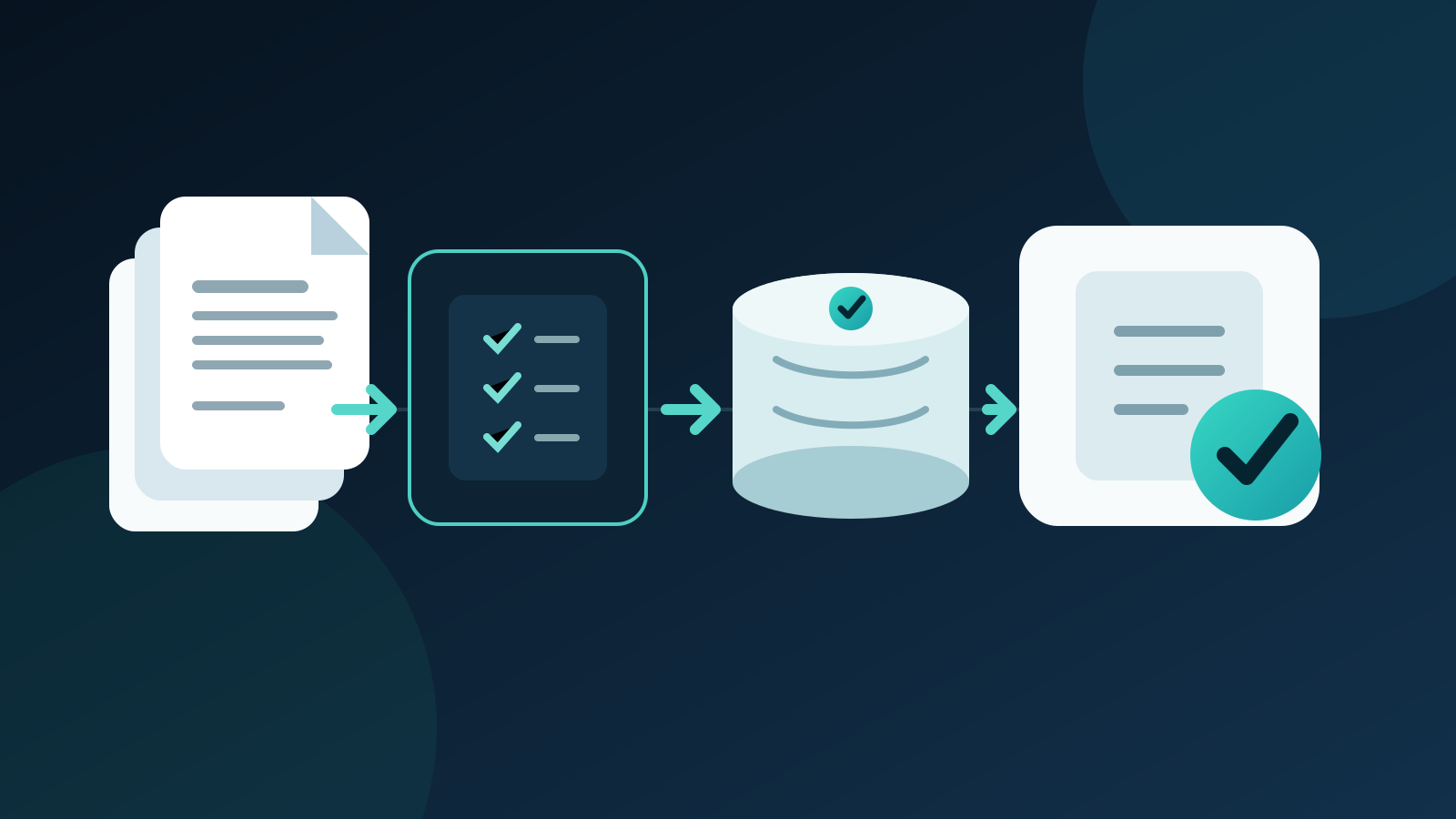
AI tender writing uses artificial intelligence to organise requirements, find approved evidence and prepare response drafts. For most Australian businesses, the best use is a controlled drafting workflow: a person decides whether to bid, subject experts supply the facts, AI prepares material against a compliance matrix, and an accountable reviewer approves every claim and final submission.
AI can reduce repetitive searching and first-draft work. It cannot decide strategy, invent project evidence or guarantee a winning response. The tender documents, evaluation criteria and your verified business records must remain the source of truth.
Key takeaways:
- Build a compliance matrix before generating prose.
- Use only approved, current evidence from your business.
- Keep pricing, legal commitments and final submission human-controlled.
- Require a source for every material claim, date and number.
- Measure reviewer time, unsupported claims and compliance gaps, not word count.
Contents
- What is AI tender writing?
- Where can AI help with a tender response?
- What should AI never decide in a tender?
- What is the best AI tender writing workflow?
- How do you build a tender compliance matrix?
- How should you manage evidence and claims?
- How do you protect confidential information?
- How should you compare AI tender writing tools?
- What can go wrong with AI tender writing?
- How do you run a controlled pilot?
- How should you measure the result?
- When is AI the wrong tool for a tender?
- Where should an Australian business start?
- Frequently asked questions
What is AI tender writing?
AI tender writing is the use of language models and connected business systems to analyse tender requirements, retrieve approved information and prepare response drafts. It can support a bid team, but it does not replace the people responsible for commercial strategy, technical accuracy, pricing or contractual commitments.
The category includes several different tools:
| Tool type | Useful contribution | Main limitation |
|---|---|---|
| General writing assistant | Rephrase, summarise and structure supplied text | Lacks trusted business context and may invent details |
| Tender analysis tool | Extract questions, dates, word limits and mandatory requirements | Can miss information in tables, annexures or unusual formats |
| Evidence search assistant | Find approved case studies, policies and capability statements | Depends on clean permissions, metadata and current records |
| Drafting workflow | Prepare first drafts from a question, plan and approved evidence | Fluent language can hide weak or unsupported claims |
| Tender management platform | Track owners, deadlines, reviews and reusable content | Setup and content governance still require human work |
Australian search data for this guide found about 10 monthly searches for “AI tender writing”, with low advertising competition. The current results are led by software vendors and tender advisers. The missing practical question is how a business can use AI without submitting generic, inaccurate or unsupported material.
The commercial opportunity is significant enough to justify better process. The Australian Department of Finance reports that entities published 86,926 procurement contracts with a total reported value of $104.9 billion in 2024–25. That figure covers Australian Government contracts reported on AusTender and represents maximum contract values, not annual expenditure. It does not include every state, local government or private tender.
Where can AI help with a tender response?
AI is most useful where the work is repetitive, evidence-based and easy for a person to verify.
| Tender task | Useful AI contribution | Human responsibility |
|---|---|---|
| Initial document review | Extract deadlines, questions, schedules and mandatory conditions | Confirm the full tender pack and decide whether to bid |
| Compliance planning | Turn requirements into a traceable matrix | Check every item, owner, dependency and submission rule |
| Evidence retrieval | Find approved policies, project examples and credentials | Confirm currency, relevance, permission and accuracy |
| Response planning | Propose a question outline against evaluation criteria | Choose the strategy and buyer-specific emphasis |
| First drafting | Combine an approved plan with selected evidence | Check every claim, commitment, number and qualification |
| Consistency review | Flag inconsistent names, dates, terms and figures | Resolve the correct version with source owners |
| Editing | Improve clarity, remove repetition and fit word limits | Protect meaning and required detail |
| Final quality check | Compare the draft with the compliance matrix | Approve the response and control submission |
For most teams, the best early use is not “write this tender”. It is “show every requirement, assign an owner and prepare a sourced draft for this one question”. That narrower task is easier to test and much harder to misuse.
AI can also help a team reuse good material without copying old answers blindly. A managed knowledge system can return the latest approved capability statement, policy or project reference, together with its owner and review date. Our guide to AI knowledge management explains how permissions and source governance support that kind of retrieval.
What should AI never decide in a tender?
Keep decisions human when they create a legal, financial, safety, delivery or reputational commitment.
AI should not independently:
- decide whether the opportunity fits the business
- accept contractual terms or identify a clause as harmless
- set pricing, margins, discounts or commercial assumptions
- promise staff, delivery dates, service levels or locations
- select a referee or disclose a customer relationship
- claim certifications, licences, experience or results
- approve a conflict-of-interest declaration
- change a technical method or safety control
- submit the tender or communicate with the buyer
A language model predicts plausible text. It does not know whether a proposed delivery date is operationally possible or whether an old case study remains approved. It may turn a cautious source sentence into a firm commitment because the stronger wording sounds more persuasive.
The accountable bid lead should own the response. Technical, commercial, legal and executive reviewers should approve the parts within their authority. The system should record who supplied the evidence, who approved the claim and which version was submitted.
What is the best AI tender writing workflow?
For most Australian businesses, the best workflow has five controlled stages: qualify, map, retrieve, draft and approve. AI can assist in the middle, while people control the opportunity decision and submission.
- Qualify the opportunity. Confirm scope, fit, capacity, conflicts, deadlines and commercial value before drafting.
- Freeze the tender pack. Save the request, addenda, schedules, templates and buyer communications as a versioned source set.
- Build the compliance matrix. Record every question, requirement, limit, attachment, date and evaluation criterion.
- Assign owners and reviewers. Name the person responsible for content, evidence and approval for each response.
- Retrieve approved evidence. Pull only current material from nominated business sources.
- Prepare a response plan. State the answer, proof, buyer benefit and required qualification before writing prose.
- Draft from the plan. Give AI the question, criteria, word limit and approved evidence, then require source references.
- Review by discipline. Technical, commercial and legal reviewers check the content within their authority.
- Run a compliance check. Compare the near-final response against the matrix, tender pack and addenda.
- Approve and submit manually. An authorised person checks the final files, portal fields and receipt.
Do not let a generated draft become the source for later tenders. Store the approved evidence separately and keep the final submitted response as a record. Otherwise, an unsupported sentence can be copied into a content library and repeated for years.
This process works best as a scoped AI workflow automation, not an unrestricted chatbot. Each stage should have named inputs, outputs, permissions and approval boundaries.
How do you build a tender compliance matrix?
A compliance matrix converts a large tender pack into a list of checkable obligations. It is the control layer between the source documents and the final response.
Include at least these fields:
| Field | What to record |
|---|---|
| Requirement ID | Your stable reference for the item |
| Source | Document name, version, page and clause |
| Requirement | The exact question, instruction or obligation |
| Type | Mandatory, scored, contractual, attachment or administrative |
| Evaluation link | The relevant criterion and weighting, where provided |
| Response limit | Word, page, file or format limit |
| Owner | Person responsible for the answer |
| Evidence | Approved sources required to support the response |
| Reviewer | Person with authority to approve the content |
| Status | Not started, drafting, review, approved or blocked |
| Final location | File, section or portal field containing the answer |
AI can produce a first pass, but a person must compare it with every part of the tender pack. Tables, scanned schedules, appendices, addenda and portal instructions are common sources of missed requirements.
Keep the exact source wording beside any summary. A short AI summary may remove a condition such as “must”, “within five business days” or “provide two examples from the past three years”. Those details often determine compliance.
When an addendum arrives, rerun the comparison against the frozen pack and flag changed items. Do not quietly replace the source documents. The team needs to know which answers, prices and declarations require another review.
How should you manage evidence and claims?
Every material claim should point to a current, approved source. If the source does not support the exact statement, change the statement or remove it.
Create a small evidence register with:
- an evidence owner
- the approved wording or factual record
- its source file and version
- the customers, projects or contexts where it may be used
- approval and expiry dates
- confidentiality restrictions
- any qualification that must travel with the claim
Separate evidence from style. AI can help express an approved fact clearly, but it should not strengthen the fact. “The team has delivered projects in three states” cannot become “nationwide delivery capability” unless another source supports that conclusion.
Treat customer names, testimonials, performance results and project details as restricted by default. Confirm contractual permission before using them. A case study approved for the website may not include every detail requested in a tender.
Use source-linked prompts. Ask the system to draft only from the supplied material, show the source beside each claim and mark missing evidence as [EVIDENCE REQUIRED]. Test whether it follows that rule when the source set is incomplete.
How do you protect confidential information?
Tender packs can contain buyer information, security requirements, pricing assumptions and proposed contract terms. Your response may add employee details, customer references, financial information and intellectual property.
Before using an AI product, record:
- what information it receives
- which provider and model process it
- where prompts, files, indexes, outputs and logs are stored
- whether the provider uses that information for model training
- who can access the workspace and export content
- how access is removed when a person changes role
- retention and deletion settings
- the process for a privacy, security or contractual incident
Do not paste confidential tender documents into a public consumer chatbot because it is convenient. Use an approved business environment with appropriate contracts, administration, access controls and data settings.
The Office of the Australian Information Commissioner states that privacy obligations apply to personal information entered into an AI system and to AI output containing personal information. Its guidance on commercially available AI products recommends due diligence, privacy by design, human oversight and regular review.
Apply permissions before content reaches the model. A bid writer should not gain access to every employee record or customer contract merely because the search tool sits across the whole document system.
How should you compare AI tender writing tools?
Compare products against your workflow and tender data, not a polished demonstration.
| Criterion | Questions to ask |
|---|---|
| Requirement extraction | Can it cite the exact document, page and clause for every item? |
| Document handling | Can it read tables, scanned files, appendices and addenda reliably? |
| Evidence controls | Can it search only approved libraries and show source versions? |
| Permissions | Can administrators limit tenders, folders, customers and actions by role? |
| Draft controls | Can it refuse unsupported claims and preserve required qualifications? |
| Review workflow | Can technical, commercial and legal approvals remain separate? |
| Audit trail | Can you see inputs, edits, approvals and final submitted versions? |
| Data use | Is customer data used for training, and can that use be disabled? |
| Storage | Where is content stored, for how long and under which law and contract? |
| Export | Can you export the matrix, evidence links, drafts and audit history? |
| Cost | Does pricing include users, model usage, storage, setup and support? |
For most businesses, the best option is the one that makes sources and approval boundaries visible. A tool that generates longer answers faster is not better if reviewers cannot see where the claims came from.
Test two realistic questions from an old tender using de-identified material. Include a missing fact, an expired policy, conflicting numbers and an instruction buried in an appendix. The tool should flag uncertainty rather than cover it with confident prose.
What can go wrong with AI tender writing?
The most dangerous failures often look polished. Reviewers may focus on grammar and miss that a fluent answer contains the wrong project, an expired certification or an unapproved promise.
Common failures include:
- missing a mandatory requirement in an appendix
- drafting from an old tender after the buyer issued an addendum
- inventing a customer result or project detail
- mixing evidence from two different customers
- presenting a target as a proven result
- removing a qualification while shortening an answer
- exposing confidential information to an unauthorised user or provider
- copying generic text that does not answer the evaluation criterion
- creating inconsistent pricing, dates or staffing across schedules
- submitting hidden comments, placeholders or internal instructions
Set stop conditions before the team relies on the workflow. Pause it if citations cannot be traced, permissions expose unrelated material, addenda are not detected, restricted information appears in drafts or the system converts missing evidence into a claim.
Prompt injection is another risk. A tender document or attached file could contain text that attempts to redirect an AI system. Treat uploaded documents as data, not operating instructions. The workflow should follow fixed business rules and ignore instructions that sit outside the approved tender task.
How do you run a controlled pilot?
Use a completed tender with a known outcome and de-identified material. Do not make a live, high-value submission your first test.
- Select one old tender with a complete source pack and final response.
- Define the tasks the pilot may perform, such as requirement extraction and two first drafts.
- Remove personal, customer and commercially sensitive information that is not needed.
- Create a human-checked compliance matrix as the benchmark.
- Build a small approved evidence set with deliberate gaps and expired items.
- Run the AI workflow and record missed, invented and unsupported content.
- Have the original subject experts review the outputs without seeing the benchmark first.
- Compare total preparation and review time with the existing process.
- Test access removal, deletion, export and audit logs.
- Approve one narrow live use only if the pilot meets its acceptance rules.
For a first live use, requirement extraction or evidence search is safer than end-to-end drafting. Keep the existing submission process and require manual approval at every stage.
The Australian Government's guidance for AI adoption recommends assigning accountability, assessing impacts, managing risks and keeping records. Apply those controls to the whole workflow, not only the model.
How should you measure the result?
Measure whether the workflow helps the team submit a stronger, compliant response with less avoidable effort.
| Measure | What it shows |
|---|---|
| Requirement recall | Percentage of benchmark requirements captured correctly |
| Compliance gaps | Mandatory items missing or incomplete at each review |
| Unsupported claim rate | Draft claims without an approved source |
| Evidence retrieval accuracy | Correct and current sources returned for the question |
| Draft preparation time | Time from approved plan to first complete draft |
| Reviewer time | Total subject expert, commercial and legal checking time |
| Material correction rate | Changes to facts, commitments, pricing or qualifications |
| Rework after addenda | Effort required to find and update affected responses |
| Access incidents | Information shown to an unauthorised person or system |
| Total operating cost | Software, model use, setup, review, maintenance and support |
Do not use words generated, questions drafted or time to first output as the main success measure. Those numbers can improve while submission risk increases.
Win rate is also a weak early measure. Tender outcomes depend on price, fit, competition, relationships, procurement strategy and buyer priorities. Start with process quality and compliance. Review commercial outcomes over a larger, comparable set of opportunities.
When is AI the wrong tool for a tender?
AI is the wrong first move when the business lacks approved evidence, clear ownership or a repeatable review process. Fix the content library and bid governance before adding generation.
Use ordinary templates, checklists and document search when the work is simple and predictable. A spreadsheet compliance matrix may be enough for an occasional, low-complexity response.
Avoid AI drafting when the tender contains highly restricted information that your approved environment cannot protect. It may also be inappropriate where tender conditions prohibit a particular use, customer contracts limit disclosure, or the team cannot verify outputs before the deadline.
Do not bid merely because AI makes drafting cheaper. A poor-fit opportunity still consumes subject expert time and creates delivery risk if won.
Where should an Australian business start?
Choose one completed tender and one narrow task. Build a human-checked compliance matrix, prepare a small approved evidence library and test whether AI can produce source-linked outputs without filling gaps.
Set acceptance rules before the test. Require every material claim to have an approved source, every mandatory requirement to appear in the matrix and every commitment to reach an authorised reviewer. Keep submission manual.
Deployed AI provides managed AI systems with scoped connections, testing, team training and ongoing Australian support. To assess a controlled tender workflow, book a free 30-minute AI audit.
Frequently asked questions
Can AI write a tender response?
AI can prepare a first draft from a tender question, response plan and approved evidence. A qualified person must still check the requirements, strategy, claims, pricing, commitments and final submission.
Is it safe to upload tender documents to AI?
It depends on the tender conditions, information sensitivity and the provider's contracts, data use, storage, security and access controls. Use only an approved business environment, minimise the information supplied and do not upload confidential material to a public consumer chatbot.
What is the best use of AI in tender writing?
For most businesses, the best first use is requirement extraction or evidence search. These tasks are easier to verify than end-to-end drafting and can reduce missed requirements without giving AI control over commercial commitments.
Can AI improve tender win rates?
AI may reduce repetitive work and help teams find evidence, but it cannot guarantee a higher win rate. Fit, price, proof, delivery capability and the quality of human strategy remain decisive.
Should an AI tender draft disclose that AI was used?
Follow the tender conditions, buyer instructions, applicable law and your organisation's policy. Even where disclosure is not required, the business remains responsible for the accuracy, confidentiality and commitments in the submitted response.